Types of Houses in Canada: 14 Home Types Explained (2026)
A detached house, a semi and a condo townhouse can stand on the same street and cost you very different amounts. The label on the listing decides how many walls you share, what you actually own and how much a bank will lend you.
- Data checked November 2, 2026
- By Krish Paul
- 12 min read
On this page
- The short answer
- Structure, style and ownership are three different labels
- House types compared side by side
- Which type of house fits you?
- The 14 types of houses in Canada
- What Canadians actually live in
- How the type of house changes your mortgage
- What homes cost right now
- Three questions to ask about any house type
- How to choose the right type of house
- Frequently asked questions
Tap a picture to jump to that type, or read on for the official definitions, what Canadians actually live in and the mortgage math behind each one.
The short answer
The main types of houses in Canada are detached houses (including bungalows and split-levels), semi-detached houses, townhouses (freehold, condo and stacked), link homes, duplexes and other plexes, condo apartments, laneway and garden suites, mobile and manufactured homes, and cottages. The single-detached house is still the most common, at 52.6% of occupied homes in the 2021 Census.
Statistics Canada uses a stricter list of eight structural types in the 2021 Census Type of Dwelling Reference Guide. Real estate listings use more names because they mix three different things: the building’s structure, its layout or style, and how it is owned.
Structure, style and ownership are three different labels
Most confusion about house types comes from mixing these up. A listing for a “condo townhouse bungalow” is describing all three at once.
- Structure tells you how the home is attached to others: detached, semi-detached, row, stacked or in an apartment building.
- Style tells you the layout: two-storey, bungalow, split-level, 1.5-storey.
- Ownership tells you what you hold on title: freehold, condominium, co-operative or a leased lot.
Keep the three apart and every listing becomes easier to read. The ownership label usually matters most for your budget, because it decides whether you pay condo fees and who pays for the roof.
House types compared side by side
| Type | Shared walls | Usual ownership | Monthly fees | Exterior upkeep |
|---|---|---|---|---|
| Detached house | None | Freehold | Usually none | You |
| Semi-detached | One | Freehold | Usually none | You |
| Freehold townhouse | One or two | Freehold | Usually none, some pay a road fee | You |
| Condo townhouse | One or two | Condominium | Condo fees | Mostly the corporation |
| Stacked townhouse | Sides and above or below | Condominium | Condo fees | The corporation |
| Duplex to fourplex | Above or below, sometimes sides | Freehold, sometimes condo | Usually none | Owner |
| Condo apartment | Several | Condominium | Condo fees | The corporation |
| Mobile or manufactured | None | Freehold home, often on leased land | Site fee if land is leased | You |
General patterns, not rules. Always read the listing and the title: some detached houses are condos, and some townhouses carry a small monthly fee for a shared road.
Which type of house fits you?
The 14 types of houses in Canada
Jump to a type: detached, bungalow, split-level, semi, townhouse, condo townhouse, stacked, link home, plexes, condo apartment, laneway suite, mobile home, cottage.
1. Detached house
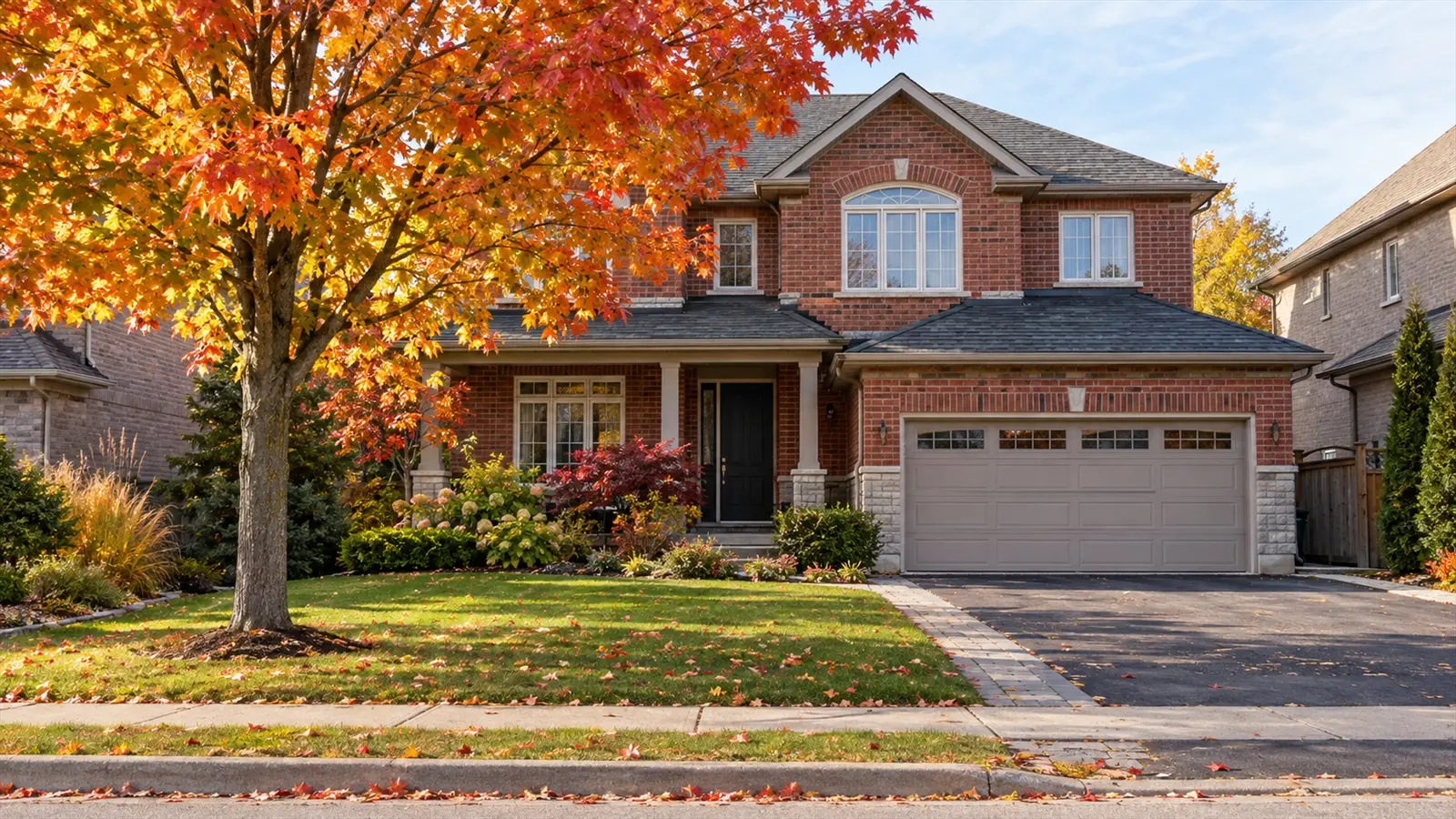
Statistics Canada defines a single-detached house as “a single dwelling not attached to any other dwelling or structure (except its own garage or shed),” with open space on all sides and no dwelling above or below. Many are two-storey homes on their own lot, owned freehold.
Good fit if you want privacy, a yard and freedom to renovate within local rules. Think twice if you do not want to budget for a roof, furnace, windows and driveway on your own. A detached house is usually the most expensive type in the same neighbourhood.
2. Bungalow
A bungalow is a detached house with all main living space on one floor, often with a basement. A raised bungalow sits higher, with a half-sunken lower level that gets more daylight. A bungaloft adds a loft above the main floor.
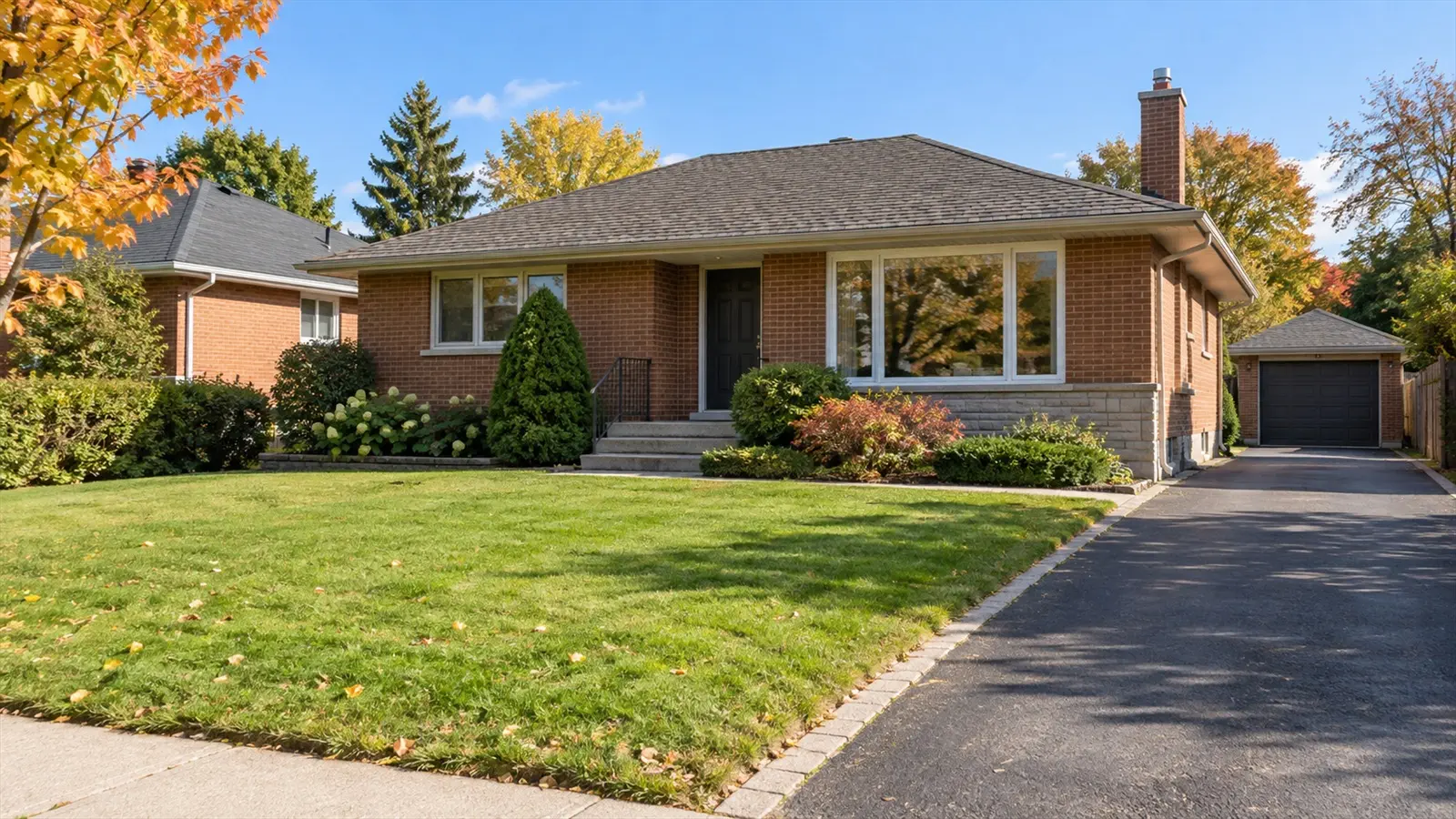
Bungalows suit older buyers and anyone who wants to avoid stairs. They need a wider lot for the same floor area, so they often cost more per square foot of living space than a two-storey house nearby.
3. Split-level house
A split-level has floors offset by half a storey, connected by short flights of stairs. A side-split shows the split from the street, with one side higher than the other. A back-split looks like a bungalow from the front, with the extra levels at the back. Many were built in suburbs from the 1950s to the 1970s.
4. Semi-detached house
The census definition is “one of two dwellings attached side by side (or back to back) to each other,” with no dwelling above or below. You own your half and your lot outright, and the shared wall is the only thing you have in common with your neighbour.
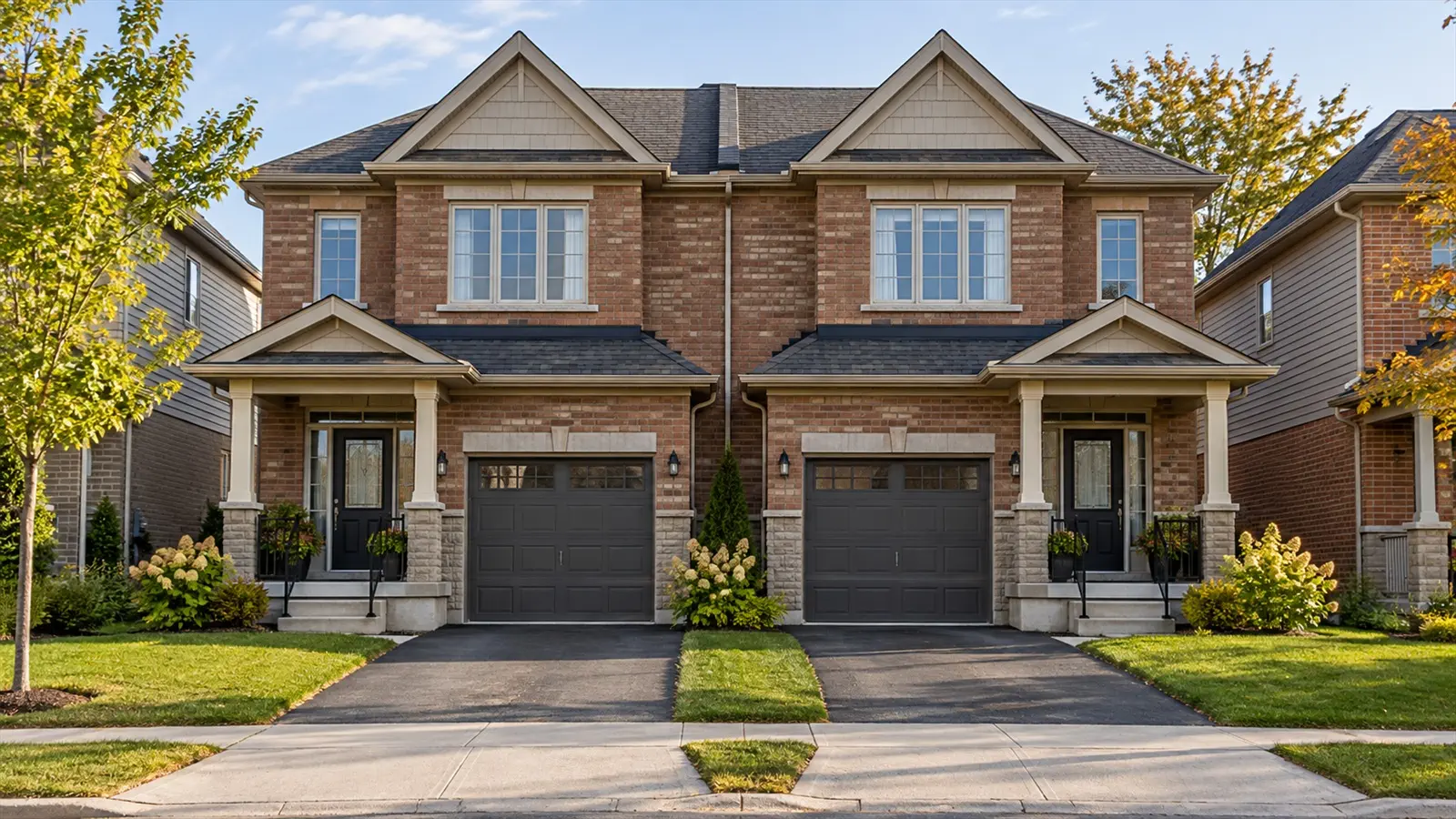
A semi is often the cheapest way to own a freehold house with a yard in a city. Check the shared wall for sound and fire separation, and ask about any shared driveway or drainage.
5. Freehold townhouse (row house)
Statistics Canada calls these row houses: “one of three or more dwellings joined side by side,” with no other dwelling above or below. End units share one wall. Middle units share two. With freehold ownership you own the unit and the land under it, and there is usually no condo fee.
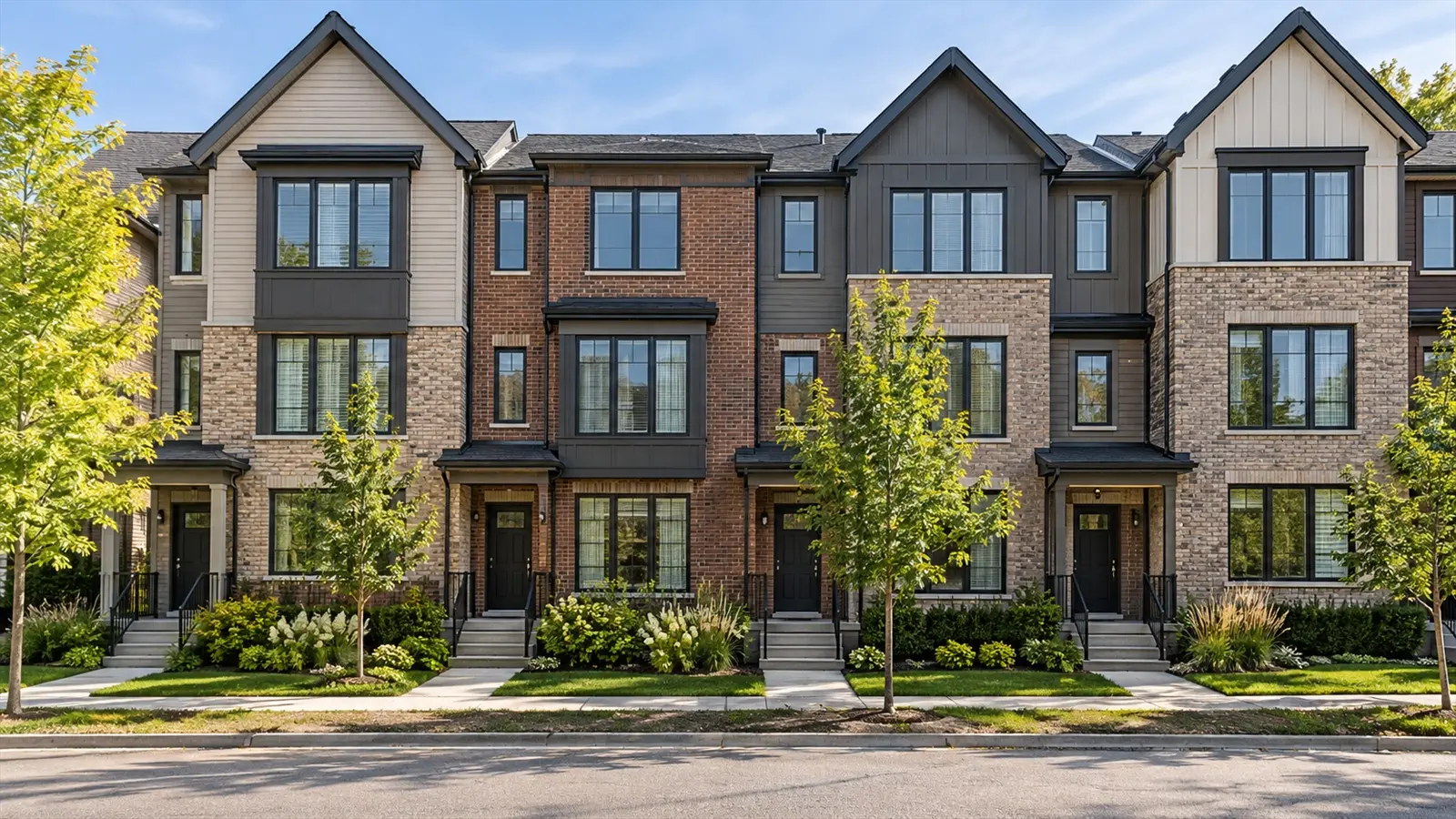
In Ontario, some freehold townhouses sit on a “parcel of tied land” and pay a monthly fee for a shared road or snow clearing. The fee is usually much lower than a full condo fee, but your lawyer should explain what it covers.
6. Condo townhouse
A condo townhouse looks like a freehold one, but the ownership is different. You own the unit, and a condominium corporation owns and maintains the common elements, often including roofs, windows, landscaping and private roads. You pay monthly condo fees for that, and the corporation sets rules on renovations, pets and rentals. See freehold vs condo townhouse for a side-by-side comparison, including Ontario POTL townhouses.
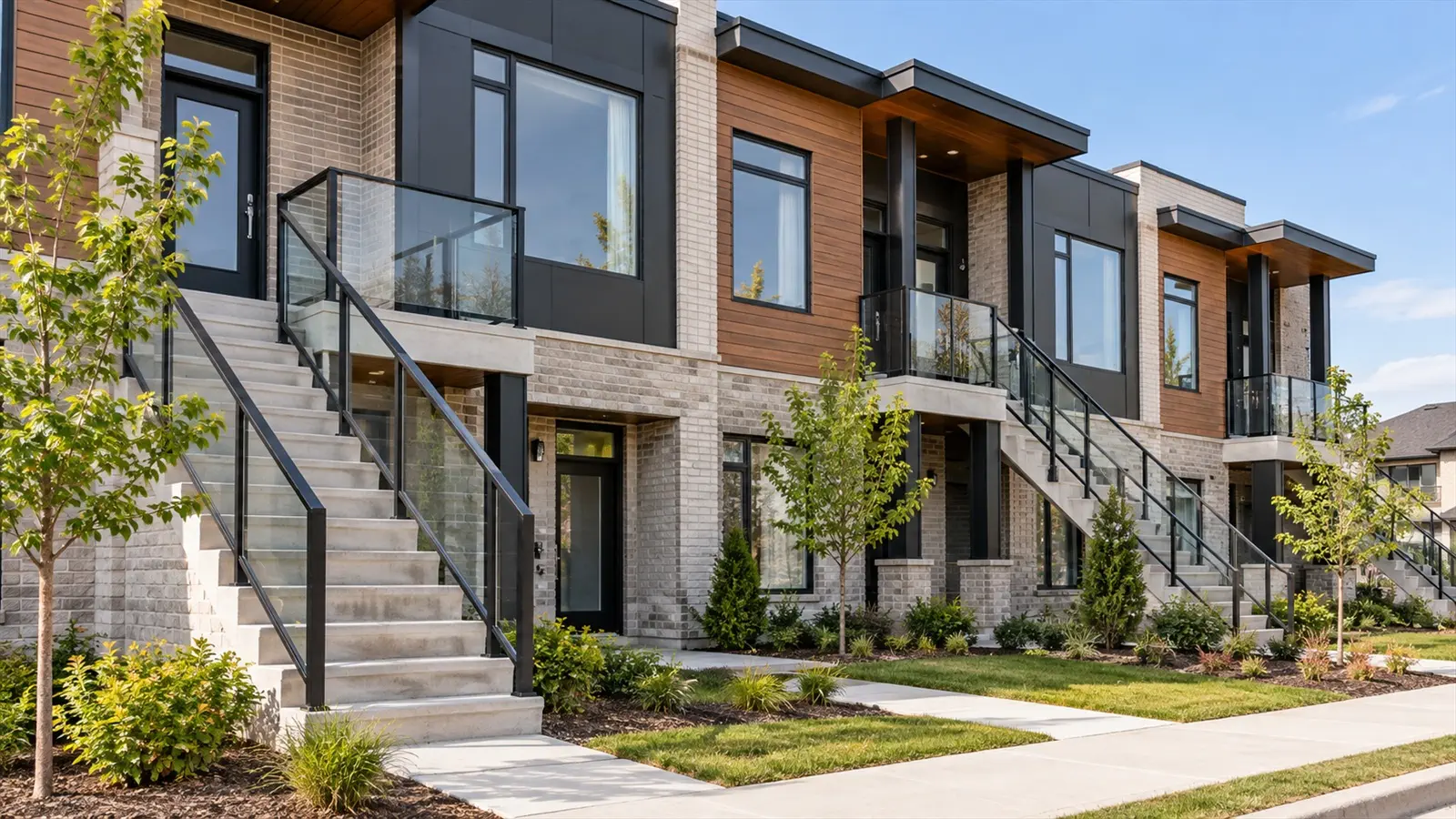
7. Stacked townhouse
Stacked townhouses put one unit on top of another, often two storeys each, with separate outdoor entrances. They are almost always condos. They often cost less than a regular townhouse in the same area, but the upper unit can mean several flights of stairs and the lower unit often has less light.
8. Link home
A link home looks detached above ground but is joined to its neighbour below ground, usually through the foundation or garage wall. It is common in parts of Ontario. Listings sometimes describe it as a detached house, so ask the seller or check the survey.
9. Duplex, triplex and fourplex
In census terms, a duplex is “one of two dwellings located one above the other.” On listings, a duplex, triplex or fourplex is a building with two, three or four units, and you can buy the whole building. Many owners live in one unit and rent the rest. Plexes with outdoor staircases are a familiar sight in Montreal.
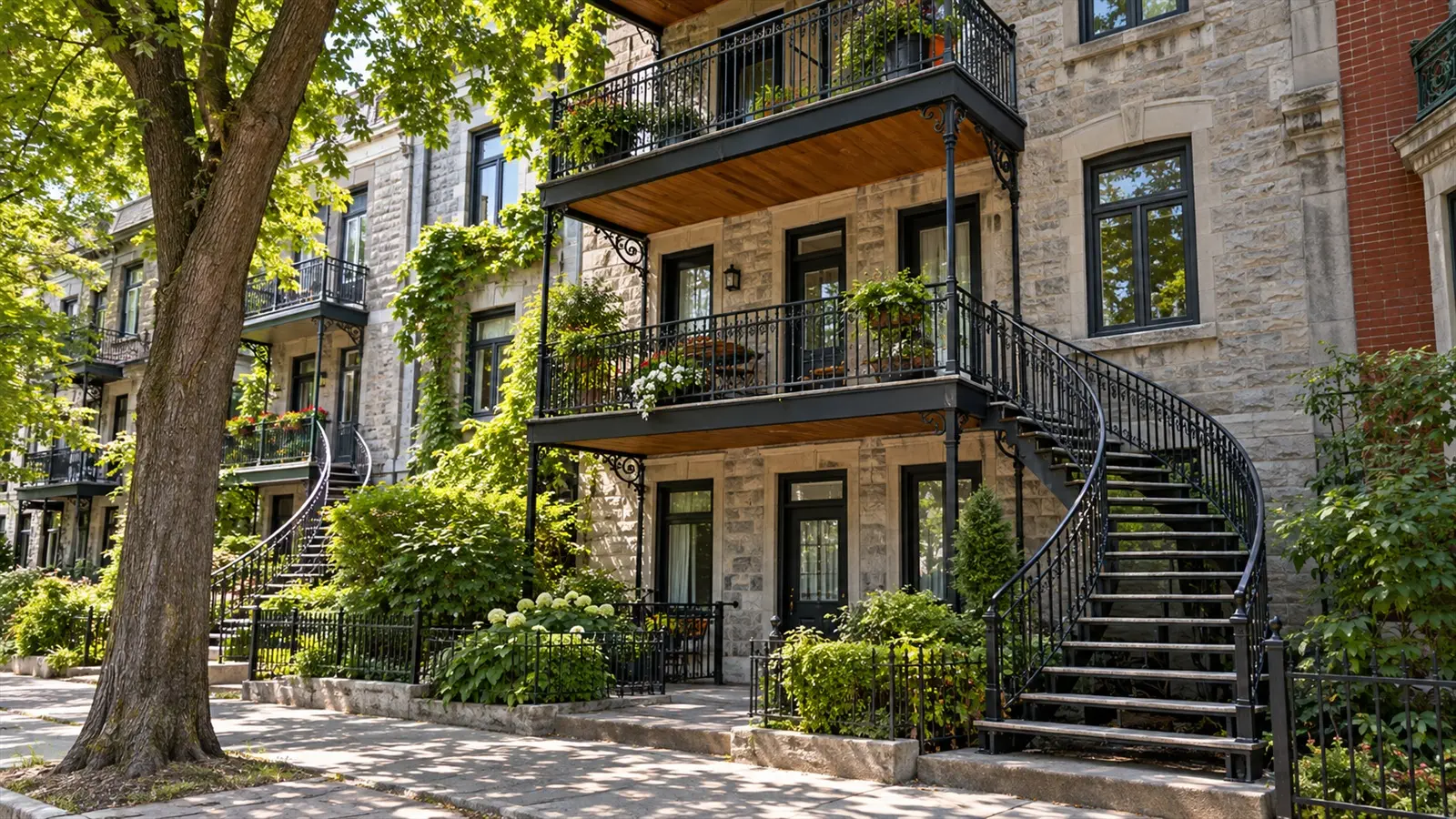
The CMHC says it insures mortgages on duplexes, condominiums, and manufactured or mobile homes, among other property types. How a lender counts rental income from the other units varies, so ask before you make an offer.
10. Condo apartment
A condo apartment is a unit in a low-rise, mid-rise or high-rise building. The census splits apartments by height: fewer than five storeys, or five or more. You own your unit and share ownership of the hallways, lobby, roof and amenities with the other owners.
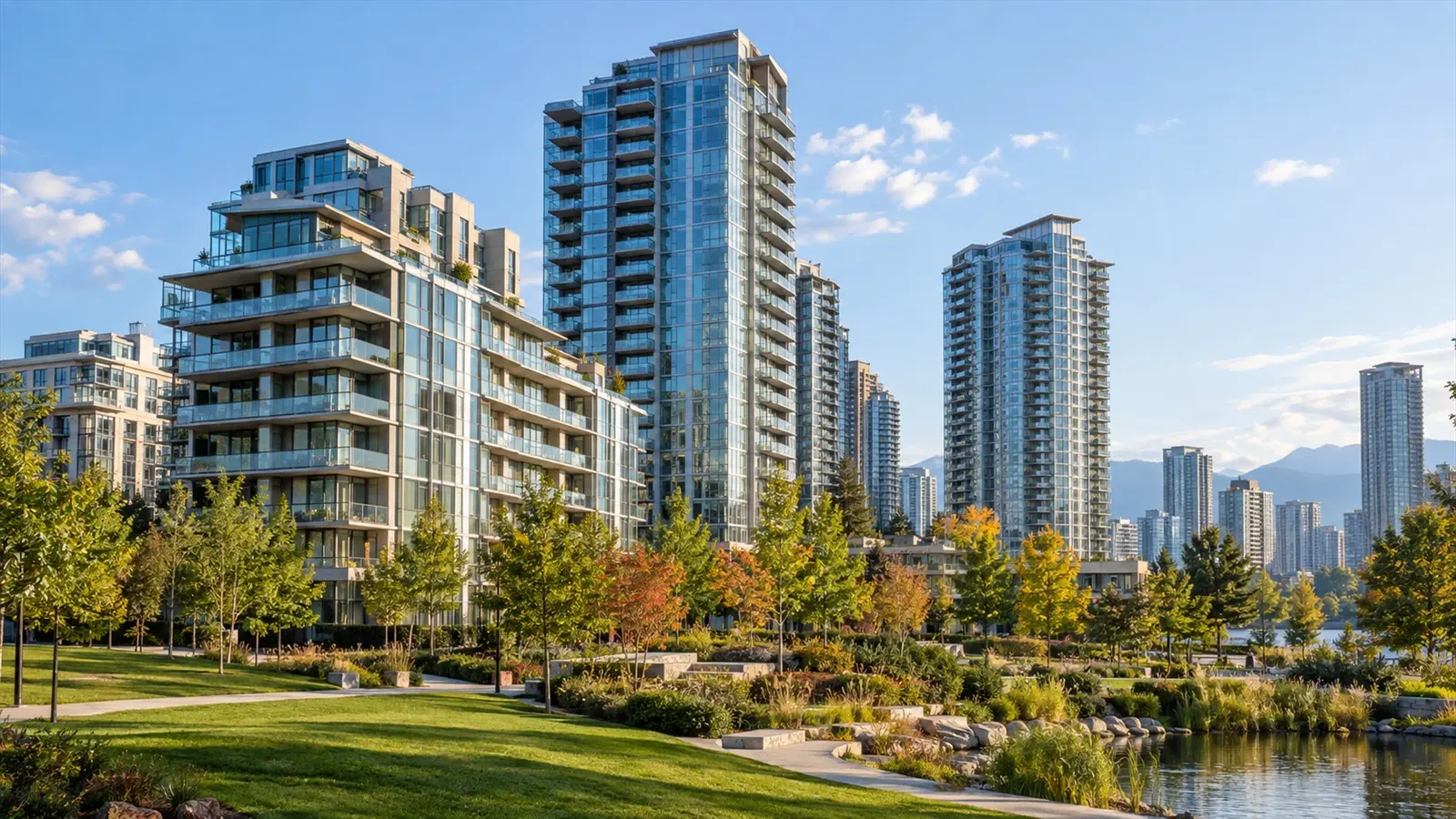
The CMHC lists the recurring costs of a condo: monthly condominium fees, a contingency for emergency repairs, and amenity fees such as storage or extra parking if they are not in the common expenses. In some provinces you also pay two months of common expenses toward the reserve fund when you buy. Our condo fees guide shows how fees change the mortgage you can qualify for.
11. Laneway house and garden suite
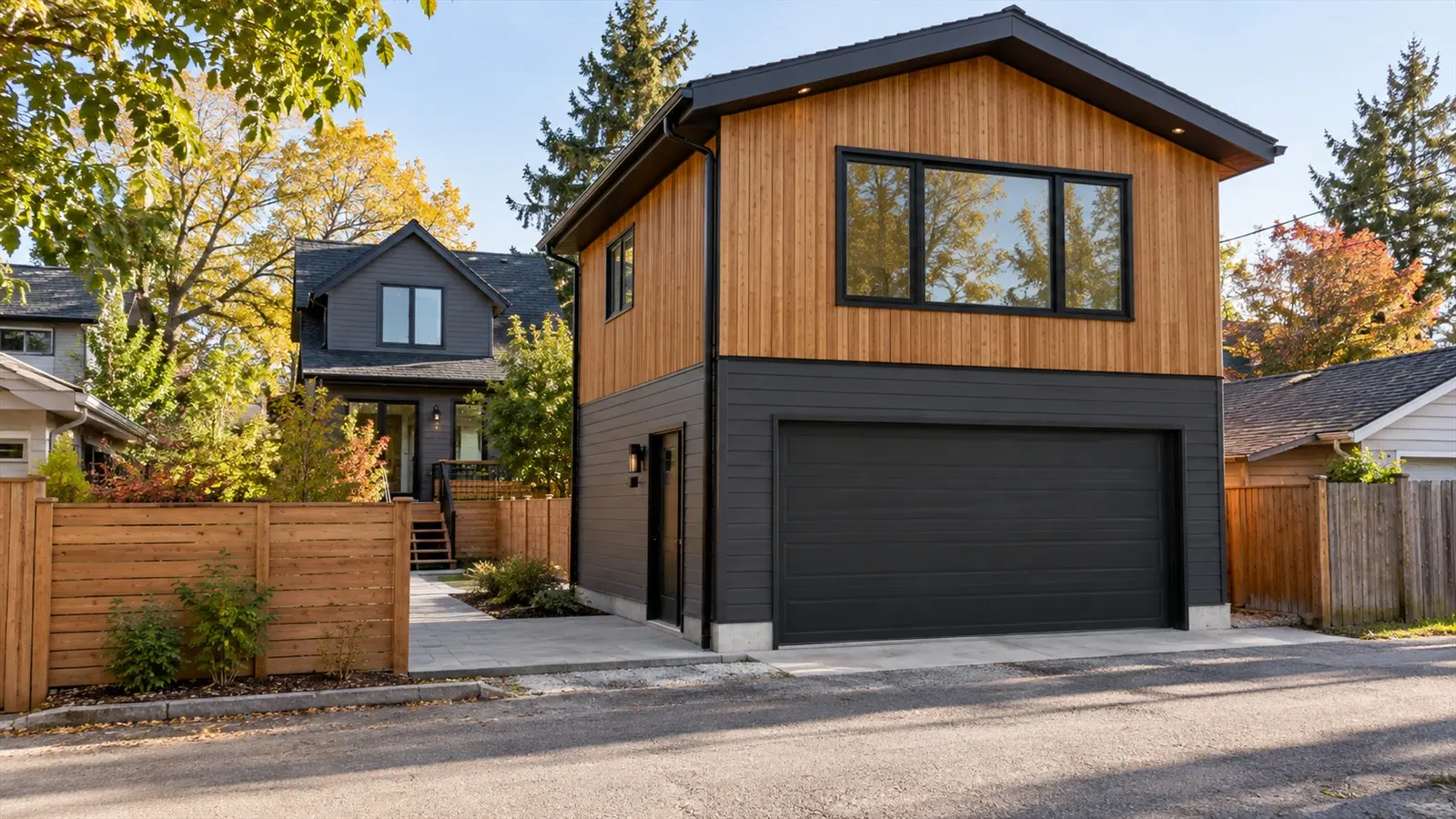
A laneway house is a smaller home built at the back of a lot that faces a rear lane. A garden suite is similar but on a lot with no lane. Both sit on the same lot as the main house and usually cannot be sold separately. Cities set their own rules on size, height and servicing, so check with your municipality before you plan one.
12. Mobile and manufactured home
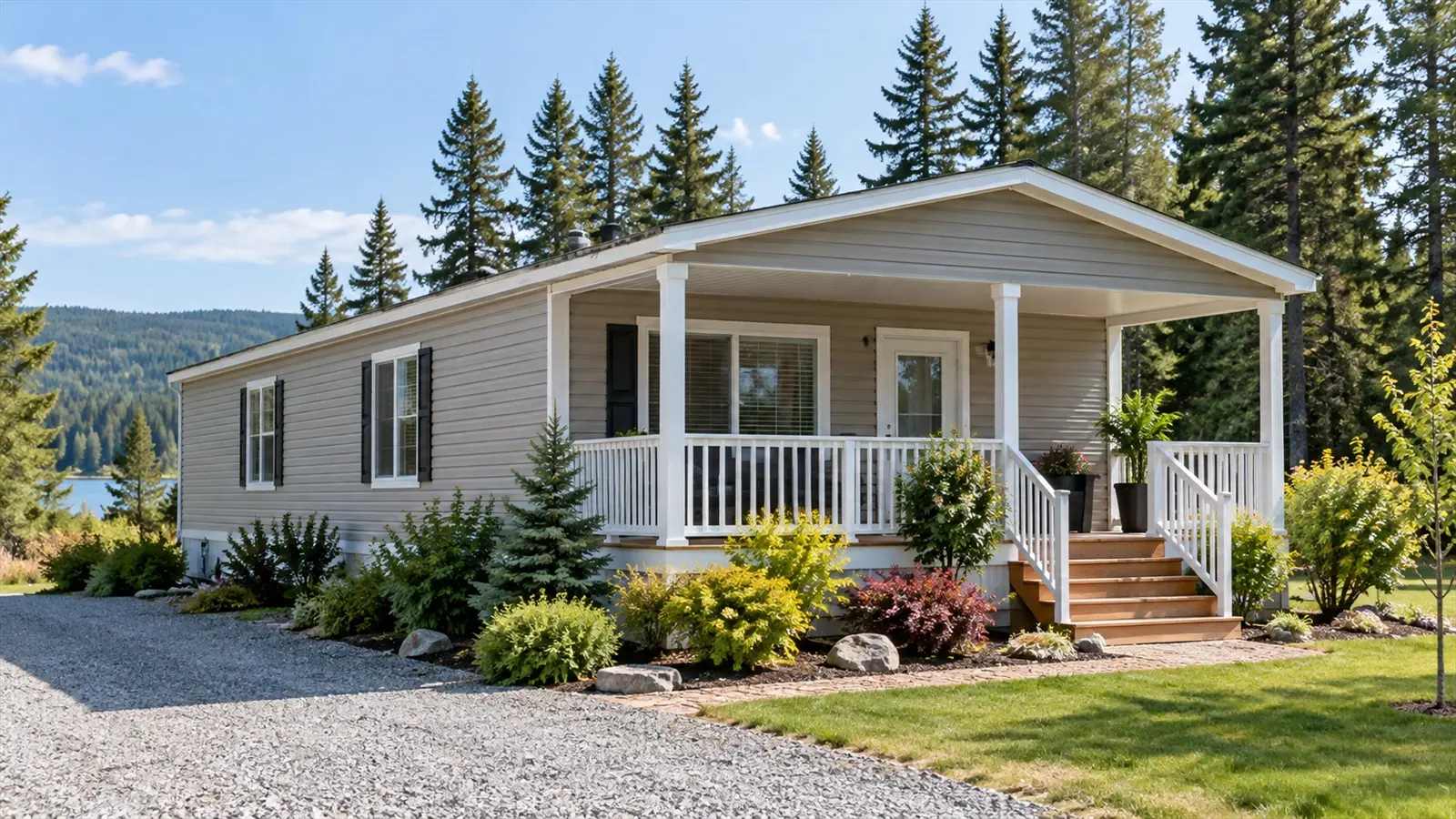
The census defines a mobile home as “a single dwelling designed and constructed to be transported on its own chassis and capable of being moved to a new location on short notice.” Manufactured homes are factory built and moved to the site. Many sit in land-lease communities, where you own the home but pay a monthly fee for the lot. Financing depends on whether the home sits on a permanent foundation; see buying a manufactured home in Canada.
13. Cottage and recreational property
A cottage is any home used mainly for leisure, often on a lake or in cottage country. Some are winterized, some are seasonal. Access, water source, septic system and road maintenance vary a lot, and lenders may treat a seasonal property differently from a year-round home.
14. Other names you will see on listings
- 1.5-storey house: a detached house with a smaller upper floor under a sloped roof.
- Co-ownership and co-op: in a housing co-operative you buy a share or membership in the co-op that owns the building, not the unit itself. Financing can be harder to find, so ask lenders early.
- Floating home: the census counts houseboats and floating homes as “other movable dwellings.”
What Canadians actually live in
The 2021 Census counted the structural type of every occupied private dwelling. Single-detached houses are still the majority, but their share has fallen in each of the last two censuses while high-rise apartments grew the most.
| Structural type | 2011 | 2016 | 2021 | Change since 2016 |
|---|---|---|---|---|
| Single-detached house | 55.0% | 53.6% | 52.6% | -1.0 pts |
| Semi-detached house | 4.9% | 5.0% | 5.0% | 0.0 pts |
| Row house | 5.9% | 6.3% | 6.5% | +0.2 pts |
| Apartment or flat in a duplex | 5.3% | 5.6% | 5.5% | -0.1 pts |
| Apartment, fewer than 5 storeys | 18.0% | 18.0% | 18.3% | +0.3 pts |
| Apartment, 5 or more storeys | 9.3% | 9.9% | 10.7% | +0.8 pts |
| Other single-attached house | 0.3% | 0.3% | 0.2% | -0.1 pts |
| Movable dwelling | 1.4% | 1.3% | 1.3% | 0.0 pts |
Source: Statistics Canada, Type of Dwelling Reference Guide, 2021 Census, Table 3. Shares of private dwellings occupied by usual residents. Statistics Canada notes the single-detached share fell 1.0 point and the five-storey-plus apartment share rose 0.8 points from 2016 to 2021.
How the type of house changes your mortgage
The house type does not change the minimum down payment for a home you will live in. The Financial Consumer Agency of Canada sets it by purchase price: 5% of the first $500,000, 10% of the portion above $500,000, and 20% once the price is $1.5 million or more. The CMHC says mortgage loan insurance is not available if the home costs $1,500,000 or more.
| Purchase price | Minimum down payment | Share of price |
|---|---|---|
| $400,000 | $20,000 | 5% |
| $666,538 (national average, Sept. 2026) | $41,653.80 | 6.25% |
| $900,000 | $65,000 | 7.22% |
| $1,200,000 | $95,000 | 7.92% |
| $1,499,000 | $124,900 | 8.33% |
| $1,500,000 | $300,000 | 20% |
Calculated by Gizly from the FCAC minimum down payment rules. Notice the jump at $1.5 million: $1,000 more on the price raises the minimum down payment by $175,100.
Condo fees reduce how much you can borrow
The CMHC’s qualifying rules count your mortgage payment, property taxes, heating and 50% of any condo fees as housing costs. Those costs should not exceed 39% of your gross household income, and all your debt payments together should not exceed 44%.
Worked example (hypothetical). Two homes have the same price and the same mortgage payment, taxes and heating. One is a freehold townhouse with no fee. The other is a condo townhouse with a $450 monthly condo fee. Lenders count half of that fee, $225 a month, or $2,700 a year. To keep housing costs at 39% of income, the condo buyer needs about $6,923 more in gross yearly income to qualify for the same mortgage.
Math: $225 x 12 = $2,700; $2,700 / 0.39 = $6,923. Checked a second way by comparing the income needed for $3,000 and $3,225 in monthly housing costs. Individual lenders may apply stricter limits.
Plan for closing costs too. The CMHC suggests budgeting 1.5% to 4% of the purchase price, and land transfer tax is often the largest part. Our land transfer tax calculator covers every province. Use our mortgage payment calculator to compare types at different prices, and see how much CMHC insurance costs if you put down less than 20%.
What homes cost right now
The Canadian Real Estate Association reported a national average sale price of $666,538 in September 2026, down 1.6% from a year earlier. Its MLS Home Price Index was down 3.4% year over year. The average covers all home types and is pulled up by expensive markets, so local prices by type can be far higher or lower. Your local real estate board publishes prices by type for your area.
Three questions to ask about any house type
- What do I own?Freehold means the land and building. Condo means your unit plus a share of common elements. Co-op means a share in the co-op.
- What will it cost each month beyond the mortgage?Condo fees, site fees, road fees, heating and property tax all count.
- Who decides on repairs?In a freehold home you do. In a condo, the board does, and a weak reserve fund can mean a special assessment.
How to choose the right type of house
- Set your budget first. Work out your down payment and the monthly cost you can carry, including any fees, before you narrow the type.
- Rank privacy against upkeep. A detached house gives the most privacy and the most work. A condo gives the least work and the most rules.
- Think about the next five years. Stairs, room for a growing family, a rental unit to help with the mortgage, or a shorter commute can each point to a different type.
- Read the paperwork for the ownership type. For a condo, review the corporation’s financial documents and reserve fund. For a freehold, get a home inspection and check the survey.
- Compare the full cost. Put two or three types through the same calculator, with fees, taxes and insurance included, before you make an offer.
Frequently asked questions
What are the main types of houses in Canada?
The main types are detached houses (including bungalows and split-levels), semi-detached houses, townhouses (freehold, condo and stacked), duplexes, triplexes and fourplexes, condo apartments, laneway and garden suites, and mobile or manufactured homes. Statistics Canada reports homes under eight structural types in the census.
What is the most common type of house in Canada?
The single-detached house. In the 2021 Census, 52.6% of occupied private dwellings in Canada were single-detached houses, down from 53.6% in 2016. Apartments in buildings with fewer than five storeys were second at 18.3%.
What is the difference between a townhouse and a semi-detached house?
A semi-detached house shares one wall with one other home, so there are two units in the building. A townhouse, which Statistics Canada calls a row house, is one of three or more homes joined side by side. Middle townhouses share two walls.
Is a condo a type of house?
Condo describes how you own a home, not its shape. A condo can be an apartment, a townhouse, a stacked townhouse or even a detached house in a condo development. You own your unit plus a share of the common elements and pay monthly condo fees.
Does the type of house change my down payment?
For a home you will live in, the minimum down payment is set by the purchase price, not the house type: 5% on the first $500,000, 10% on the part from $500,000 to $1.5 million, and 20% at $1.5 million or more. Condo fees do affect how much you can borrow, because lenders count 50% of them in your debt ratios.
What is the difference between a duplex and a semi-detached house?
In census terms, a duplex is two homes stacked one above the other, while a semi-detached house is two homes side by side. On real estate listings, the word duplex is also used for any building with two units, so check the floor plan.
- Sources, checked November 2, 2026: Statistics Canada, Type of Dwelling Reference Guide, 2021 Census (updated April 27, 2022), definitions and Table 3; CREA national statistics release for September 2026 (released October 16, 2026); FCAC: Saving for a down payment (modified 2025-10-15); CMHC: What is mortgage loan insurance (published 2018-06-03); CMHC: General requirements for homeowner mortgage loan insurance (published 2020-06-05); CMHC: Mortgage loan insurance FAQs (published 2018-03-31); CMHC: Condominium purchase and recurring costs (published 2018-03-31).
- Method: Down payments and the condo fee example were calculated by script from the FCAC and CMHC rules above and re-checked a second way. The chart is drawn from Statistics Canada Table 3. House photos are AI-generated illustrations, not real listings.
Important: This guide is general information, not financial, legal or real estate advice. Lender rules can be stricter than the minimums shown, and local zoning decides what can be built on a lot. Gizly is not affiliated with Statistics Canada, the CMHC or CREA. See our affiliate disclosure.
Keep reading


Compare before you switch
Rates and offers checked against each bank’s own page.
Send it to a friend, a family member or a coworker with the same question. It takes one tap.
How this page was made: Gizly uses AI tools to help research and draft its guides. Krish Paul, the editor, is responsible for what Gizly publishes. Spot an error? Tell us and we will fix it.