Freehold vs Condo Townhouse in Canada: What You Own and What You Pay
Two townhouses can look identical from the street and still be owned in completely different ways. The word on the listing changes your monthly costs, your repair bills and your mortgage.
- Rules checked November 2, 2026
- By Krish Paul
- 6 min read
On this page
This guide explains freehold, condo and POTL townhouses, what you own with each, and how condo fees change the mortgage you can qualify for.
The short answer
A freehold townhouse means you own the home and the land under it and pay for your own repairs, usually with no monthly fee. A condo townhouse means you own the unit plus a share of the common areas, a condo corporation looks after shared parts, and you pay a monthly fee that lenders count against your income.
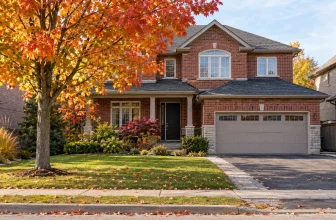
The building can look the same either way. Statistics Canada calls both a row house: “one of three or more dwellings joined side by side,” with no other dwelling above or below. The difference is on the title, and it changes your costs, your rules and your mortgage.
Freehold vs condo townhouse at a glance
| Freehold townhouse | Condo townhouse | |
|---|---|---|
| Land under the home | You own it | Usually common, owned with others |
| Monthly fee | Usually none | Condo fees |
| Roof, windows, exterior | You arrange and pay | Often the corporation, from fees |
| Snow and landscaping | You | Often the corporation |
| Rules on changes and rentals | Local bylaws only | Declaration, bylaws and rules too |
| Key document before buying | Survey and home inspection | Status certificate in Ontario |
General patterns. What a condo corporation covers is set by its declaration, so check each building.
What you own with a freehold townhouse
You own your unit and the lot it sits on, much like a detached house that happens to share walls. You decide when to replace the roof or windows and you pay for it. Shared walls are usually party walls, so work that affects a neighbour may need their cooperation.
The upside is control and no monthly fee. The downside is that you carry repair costs yourself, and it is up to you to set money aside for them.
What you own with a condo townhouse
The Condominium Authority of Ontario describes freehold condo corporations as ones where the land and property are “jointly owned by the unit owners.” You own your unit and a share of the common elements, such as private roads, landscaping and often the exterior.
Your monthly fee, which the CAO calls common expenses, pays for maintaining those common elements, contributions to the reserve fund, and services such as management. The corporation’s declaration sets your share as a percentage, which can vary with unit size. Boards can also add special assessments when the budget falls short.
The Ontario in-between: POTL townhouses
Some Ontario townhouses are sold as freehold but sit on a “parcel of tied land,” or POTL. The CAO lists the common elements condo as one of four types of freehold condo. It has “no units,” only common elements “shared by owners of parcels of tied land (POTL) that are legally attached to the common elements.” Examples it gives include shared roads.
In practice, you own your house and lot outright, and you also pay a monthly fee for the shared road or other common elements. The fee is often much lower than a full condo fee, but it is not optional and it travels with the property.
How each one affects your mortgage
Under CMHC qualifying guidelines, your housing costs include the mortgage payment, property taxes, heating and 50% of condo fees. Those costs should not exceed 39% of gross household income. A freehold townhouse with no fee leaves more room under that limit.
Worked example (hypothetical). Two townhouses on the same street have the same price, taxes and heating. One is freehold with no fee. The other is a condo townhouse with a $350 monthly fee. The lender counts $175 a month, or $2,100 a year. At the 39% limit, the condo buyer needs about $5,385 more in gross yearly income to qualify for the same mortgage.
Math: $175 x 12 = $2,100; $2,100 / 0.39 = $5,385. Re-checked by comparing the income needed for $3,000 and $3,175 in monthly housing costs.
That does not make freehold cheaper overall. The condo fee pays for work a freehold owner still has to fund, so compare the fee with a realistic repair budget for the same house. Our condo fees guide shows the income effect at more fee levels.
Townhouses are a growing share of Canadian homes
Row houses made up 6.5% of occupied homes in the 2021 Census, up from 5.9% in 2011. The census counts structure, not ownership, so freehold and condo townhouses are counted together.
Which one suits you
- Freehold fits ifyou want control over repairs and changes, no monthly fee, and you are ready to save for a roof and windows yourself.
- Condo fits ifyou want exterior work, snow and landscaping handled, and you accept rules and a monthly fee.
- Either waycheck the numbers: the fee against your qualifying income, and the repair costs against your savings.
What to check before you buy
- Confirm the ownership on title. Ask your lawyer whether it is freehold, a POTL with a common elements condo, or a standard condo.
- For a condo, get the status certificate. In Ontario, the CAO says corporations can charge up to $100 including taxes and must provide it within 10 days. It shows the budget, reserve fund and any special assessments.
- Read what the fee covers. The CMHC resale condo checklist suggests finding out what fees include and when they are likely to increase.
- For a freehold, inspect and plan repairs. Get a home inspection and estimate when the roof, windows and furnace will need replacing.
- Run both through a calculator. Use our mortgage payment calculator with the fee included at 50%.
For every other home type, from semis to plexes, see our guide to the types of houses in Canada.
Frequently asked questions
What is the difference between a freehold and a condo townhouse?
With a freehold townhouse you own the unit and the land under it, you pay for your own repairs and there is usually no monthly fee. With a condo townhouse you own the unit plus a share of the common elements, a condo corporation maintains shared parts such as roofs or roads, and you pay monthly condo fees.
What is a POTL townhouse?
POTL means parcel of tied land, an Ontario arrangement. You own your house and lot freehold, but the lot is legally attached to a common elements condominium that owns shared parts such as a private road. You pay a monthly fee for those shared parts.
Is a freehold townhouse cheaper than a condo townhouse?
Not always. A freehold townhouse usually has no monthly fee, but you pay for the roof, windows and other repairs yourself. A condo townhouse often lists for less but adds a monthly fee, and lenders count 50% of that fee when you qualify for a mortgage.
Do condo fees affect how much mortgage I can get?
Yes. CMHC guidelines count 50% of condo fees as a housing cost, and housing costs should not exceed 39% of gross household income. A $350 monthly fee takes about $5,385 more in gross yearly income to qualify for the same mortgage.
Can I renovate a condo townhouse?
Inside your unit, usually yes within the declaration and rules. Exterior changes such as windows, doors, decks or paint colours often need board approval, because those parts may be common elements. Read the declaration and rules before you buy.
- Sources, checked November 2, 2026: Statistics Canada, Type of Dwelling Reference Guide, 2021 Census (updated April 27, 2022), row house definition and Table 3; CAO: What is a condo (modified 2026-05-11); CAO: Common expenses (modified 2026-04-06); CAO: Status certificates (modified 2026-08-12); CMHC: General requirements for homeowner mortgage loan insurance (published 2020-06-05); CMHC: Checklist for buying a resale condominium (published 2018-03-31).
- Method: The income example was calculated by script from the CMHC 39% housing cost guideline and the 50% condo fee rule, and re-checked a second way. The $350 fee is an example, not a market average.
Important: This guide is general information, not financial, legal or real estate advice. Condo law differs by province, and POTL arrangements are specific to Ontario. Gizly is not affiliated with the CMHC, the CAO or Statistics Canada. See our affiliate disclosure.
Keep reading



Compare before you switch
Rates and offers checked against each bank’s own page.
Send it to a friend, a family member or a coworker with the same question. It takes one tap.
How this page was made: Gizly uses AI tools to help research and draft its guides. Krish Paul, the editor, is responsible for what Gizly publishes. Spot an error? Tell us and we will fix it.