How to Tell If a Sale Price Is Real in Canada: 328 Deals Checked
A big percentage on a price tag tells you how far the price fell from the store's own reference price, not how cheap the item is. We measured the advertised discounts on 328 Canadian deals and set them against the federal rules for "was" prices.
- Data and rules checked November 12, 2026
- By Krish Paul
- 7 min read
On this page
The depth of the discount depended heavily on the store. Here is what that means for you, plus a quick way to check what a sale really saves.
The short answer
A sale price is only as real as the "was" price next to it. Judge a deal by the final price against what the item usually sells for and what other stores charge, not by the percentage off. In Gizly's sample, the typical advertised discount was 37.9%, but Best Buy listings had a median of 50.0% and Costco listings 23.5%.
Federal law does set limits. A store that compares a sale price with its own regular price must have sold a substantial volume at that price or offered it in good faith for a substantial period, under section 74.01(3) of the Competition Act. You still cannot see a store's sales history from the shelf, so the calculator below does the check that matters to your wallet.
Check what a sale really saves you
Enter the tag's "was" price, the sale price, and the price you would normally pay: the lowest price you have seen recently or the best price at another store.
Real saving = price you would normally pay minus the sale price. Prices before tax. Calculator by Gizly.
Hypothetical example: a blender tagged $199.99, on sale for $129.99, that you have seen at $149.99 elsewhere. The tag says 35.0% off. Your real saving is $20.00.
What 328 deals show about "was" prices
We pulled every published deal on Gizly from September 22 to October 22, 2026 that listed both a sale price and a regular price. That gave 328 deals from 24 stores. For each one we worked out the advertised discount: the regular price minus the sale price, divided by the regular price.
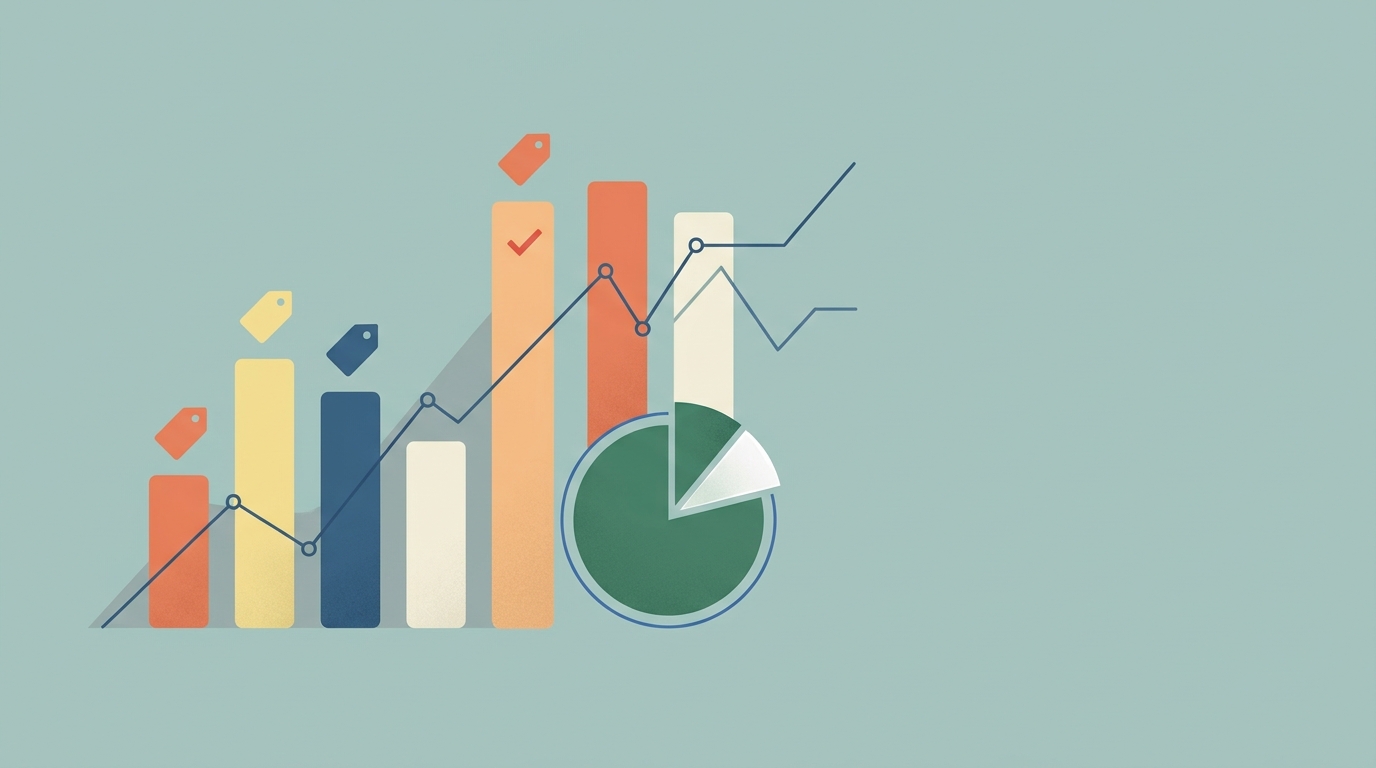
The median deal was advertised at 37.9% off and the average at 36.8%. The median dollar saving, measured against the store's own regular price, was $127.53. Half of all deals fell between 25.0% and 48.7% off.
The store mattered more than the product. Of 66 Best Buy deals, 35 were advertised at 50% off or more, which is 53.0%. Sporting Life was close behind at 21 of 43. At Costco, none of the 87 deals reached 50%, and only 6 reached 40%. Amazon sat in between, with 8 of 60 deals at 50% or more.
By median, Sporting Life deals were advertised at 47.6% off, Amazon and Home Depot (9 deals) at 31.8%, and Staples (10 deals) at 31.3%.
This does not mean one store's prices are lower or that any "was" price was wrong. We did not check the price history of these items. It does mean a 50% tag at one store and a 25% tag at another can describe similar real savings, so the percentage alone is a weak guide.
How deep the discounts went
| Advertised discount | Deals | Share of sample |
|---|---|---|
| Under 20% | 25 | 7.6% |
| 20% to 29.9% | 92 | 28.0% |
| 30% to 39.9% | 59 | 18.0% |
| 40% to 49.9% | 79 | 24.1% |
| 50% to 59.9% | 49 | 14.9% |
| 60% or more | 24 | 7.3% |
Deals Gizly published from September 22 to October 22, 2026. Advertised discount uses the regular price shown by the store at the time of posting. Shares may not add to 100% because of rounding.
About 22.3% of the deals claimed 50% off or more. Another 35.7% claimed less than 30% off. A deep discount was common enough in this month that it should not, on its own, push you to buy.
The rules for "was" prices in Canada
The Competition Act sets two tests for a store that advertises a price as lower than its own regular price. It must show one of them:
- The volume test. It sold a substantial volume of the product at that price or higher within a reasonable period of time.
- The time test. It offered the product at that price or higher in good faith for a substantial period of time.
The Competition Bureau's enforcement guidelines put numbers on these. For the volume test, more than 50% of sales should be at or above the reference price, usually over the 12 months before or after the claim. For the time test, the item should be offered at that price more than 50% of the time, usually over the six months before or after. The Bureau notes the guidelines are not law and says it is reviewing them.
The Bureau's newer ordinary selling price page describes both tests as usually measured within a year. It defines good faith as the retailer honestly believing the price is fair and expecting customers to actually pay it. Its example of a problem is "$100, now $50" for an item that never sold at $100.
In November 2025, ahead of Black Friday, the Bureau said it sees a surge in complaints about inflated regular prices. The rules apply all year, but the risk is highest during big sale events, when many listings show a strike-through price.
A 2-minute check before you buy
Use this on any deal that claims a big discount.
- Ignore the percentageWrite down the final price, including shipping and any fees.
- Find the usual priceLook at what the item sold for over the past few months, from your own notes, a price-history tool or past flyers.
- Check two other storesThe same model elsewhere is the best reference you have. Match the exact model number.
- Work out your real savingUsual price minus sale price. If it is small, waiting costs you little.
- Check the return policyA sale item with a short or final-sale return window carries more risk.
When a smaller percentage is the better deal
Two hypothetical tags make the point. Store A lists a vacuum at $399.99, down from $799.99, which is 50.0% off. Store B lists the same vacuum at $379.99, down from $449.99, which is 15.6% off. Store B is $20.00 cheaper, even though its discount looks a third as large.
Extras at checkout can also wipe out a small saving. Read our guides on credit card extended warranties and on whether Amazon Prime is worth it before you pay for extras to chase a deal.
What to do if you think a sale is fake
- Keep evidence. Screenshot the listing with the date, the regular price and the sale price. Save any earlier screenshots or flyers showing a lower regular price.
- Ask the store first. Some stores offer price adjustments or price matching. Ask whether this one does, and get the answer in writing.
- Report it. The Competition Bureau takes complaints through its online complaint form. It says it is not a consumer protection agency and cannot act on your behalf to get a refund.
- Use your province for refunds. Disputes about getting your money back go to the store, your card issuer or your provincial consumer protection office.
If the problem is at the till instead, such as an item ringing up higher than the shelf tag, a different code applies. See our guide to the scanner price accuracy code.
Frequently asked questions
How can you tell if a sale price is real in Canada?
Ignore the percentage and compare the sale price with what the item actually sold for recently and with the price at other stores. If the store rarely charged its regular price, the real saving is smaller than the tag says. Our calculator shows the difference.
What is an ordinary selling price in Canada?
It is the regular price a store compares a sale price against, often shown as the was price. Under the Competition Act, a store that uses its own regular price must have sold a substantial volume at that price or higher within a reasonable period, or offered it at that price in good faith for a substantial period.
How long must an item be sold at the regular price?
The Competition Bureau's enforcement guidelines look at whether more than 50% of sales were at or above the reference price, usually over the 12 months before or after the claim, or whether the item was offered at that price more than 50% of the time, usually over the six months before or after. Its newer ordinary selling price page says both tests are usually measured within a year.
Is 50% off a good deal?
Not by itself. In 328 deals Gizly published from September 22 to October 22, 2026, 73 were advertised at 50% off or more. Best Buy's median advertised discount was 50.0% and Costco's was 23.5%, so the percentage says as much about how a store sets its reference price as about the price you pay.
Where do you report a fake sale price in Canada?
You can file a complaint through the Competition Bureau's online complaint form. The Bureau says it is not a consumer protection agency and cannot get you a refund, so contact the store first and use your provincial consumer protection office for refund disputes.
- Sources, checked November 12, 2026: Justice Laws: Competition Act, section 74.01 (current to October 19, 2026); Competition Bureau: Ordinary Price Claims enforcement guidelines; Competition Bureau: Ordinary selling price; Competition Bureau: Businesses, make sure your Black Friday deals are real; Competition Bureau: Complaint form.
- Method: Gizly deal data: all 328 published Gizly deal posts dated September 22 to October 22, 2026 that list both a sale price and a regular price, from 24 stores. Advertised discount = (regular price minus sale price) divided by regular price. Results were calculated by a Python script and checked against a separate SQL query on the same records; both gave the same counts and averages. Limits: one month of data; deals were chosen by Gizly editors, so they lean toward larger discounts; regular prices are as shown by each store when posted and were not checked against price history; nothing here shows an all-time low or a store's compliance with the law.
Important: This guide is general information, not legal or financial advice. Prices, policies and Competition Bureau guidance can change. Gizly earns no commission from this page, and it has no affiliate links. See our affiliate disclosure.
Send it to a friend, a family member or a coworker with the same question. It takes one tap.
How this page was made: Gizly uses AI tools to help research and draft its guides. Krish Paul, the editor, is responsible for what Gizly publishes. Spot an error? Tell us and we will fix it.
Keep reading
Compare before you switch
Rates and offers checked against each bank’s own page.