Withdrawing From Your RRSP Early: What $10,000 Really Costs in Tax
Your bank takes 20% off a $10,000 RRSP withdrawal and hands you the rest. For many working Canadians that is not the full tax bill, and the room you used never comes back.
- Rules checked November 27, 2026
- By Krish Paul
- 9 min read
On this page
- The short answer
- How much tax does my bank take off?
- Why do I owe more when I file?
- How much should I take out to get the amount I need?
- What people get wrong about RRSP withdrawals
- What does it cost me in the long run?
- Is there a way to withdraw without paying tax?
- Before you withdraw: the real cost on one line
- What to do next
- Frequently asked questions
Here is what an early withdrawal really costs at three income levels in Ontario, how much to take out if you need a set amount in hand, and what to check before you call your bank.
The short answer
Money you take out of an RRSP early is added to your income for the year and taxed at your own rate. The 10%, 20% or 30% your bank withholds is only a down payment. On a $10,000 withdrawal with $55,000 or more of other income in Ontario, you will owe more when you file, and you lose that contribution room for good.
Withdraw only if you have no cheaper source of cash, such as a TFSA or savings, and if the money is not for a first home or school, which have their own plans. If your income is unusually low this year, the tax cost is smaller, though the room is still gone.
What will an RRSP withdrawal cost you? (Ontario)
Enter the amount you want to take out and your income for the year without it. The result updates as you type.
A $10,000 withdrawal has 20% withheld. With $75,000 of other income, federal and Ontario 2026 bracket rates put the tax on it at about $2,965.
Estimate only. It uses 2026 federal and Ontario bracket rates and CRA withholding rates, and leaves out tax credits, other parts of your return and any fee your institution charges. It does not apply in Quebec or to non-residents. Calculator by Gizly.
How much tax does my bank take off?
Your financial institution withholds tax when you take money out. The rate depends on the size of the withdrawal, not your income. These are the rates the Canada Revenue Agency (CRA) lists for Canadian residents.
| Amount | Outside Quebec | Quebec (federal) |
|---|---|---|
| Up to $5,000 | 10% | 5% |
| $5,000.01 to $15,000 | 20% | 10% |
| Over $15,000 | 30% | 15% |
Source: CRA, Tax rates on withdrawals, modified January 29, 2026. In Quebec, provincial tax is also withheld. Non-residents pay 25% unless a tax treaty lowers it.
On a $10,000 withdrawal, that means $2,000 is sent to the CRA and you receive $8,000. The withholding shows in box 30 of the T4RSP slip you get for the year, and you claim it as tax already paid when you file, according to the CRA.
Why do I owe more when I file?
The CRA puts it plainly: the tax withheld “may not always be enough” to cover what you owe at your bracket. That is because the whole withdrawal is reported as income on line 12900 of your return. It is taxed at the rate on your last dollars of income, called your marginal rate, which can be well above 20%.
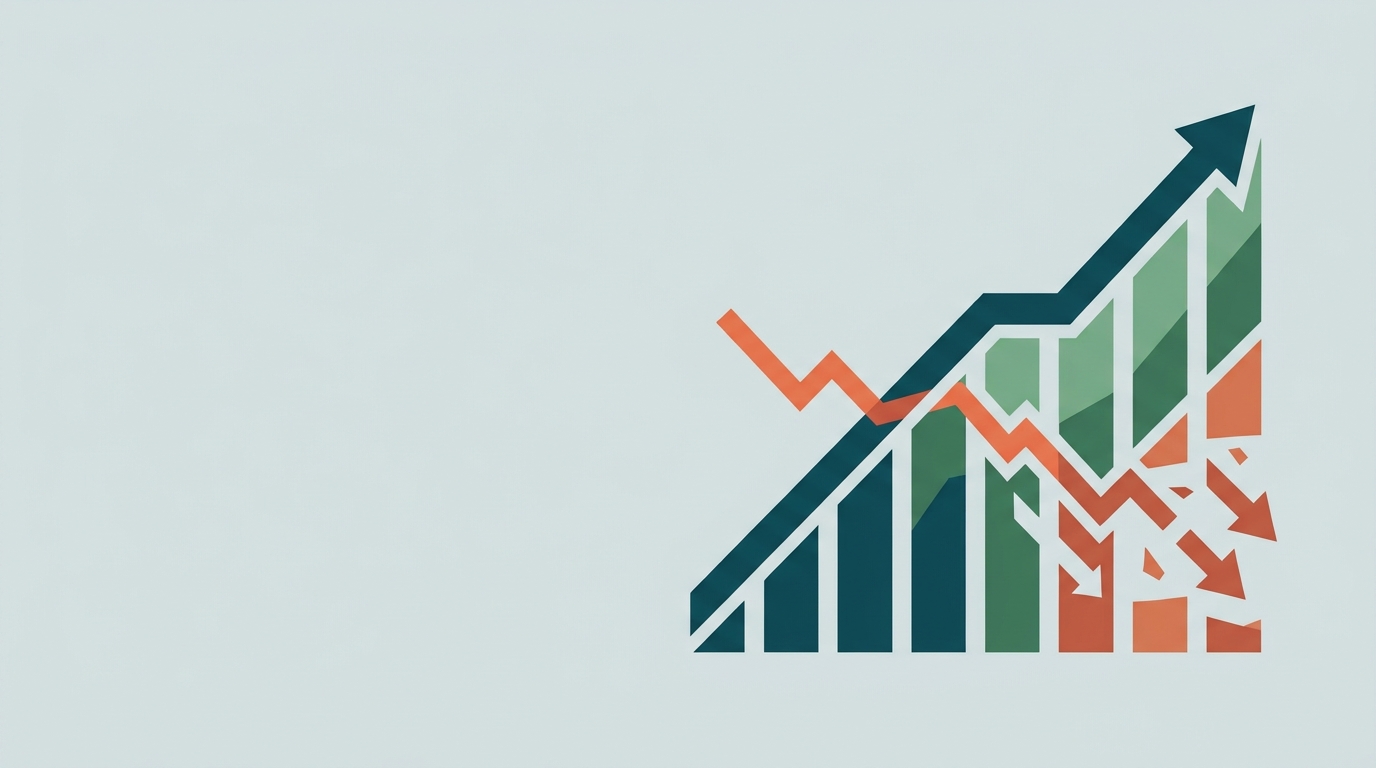
We worked out the tax on a $10,000 withdrawal using the CRA's 2026 federal and Ontario tax brackets. The chart compares the share that really goes to tax with the 20% the bank holds back.
Three people, the same $10,000
These are hypothetical Ontario examples. Each person has 2026 income before the withdrawal and takes out $10,000, so $2,000 is withheld.
- Priya earns $35,000. The estimated tax on the withdrawal is $1,905, or 19.1%. The bank withheld $2,000, so she gets about $95 back and keeps $8,095.
- Marc earns $55,000. The withdrawal pushes part of his income into higher brackets. Estimated tax is $2,736, or 27.4%. He owes about $736 more at filing and keeps $7,264.
- Dana earns $75,000. All $10,000 is taxed at a combined 29.65%, so the tax is $2,965. She owes about $965 more and keeps $7,035.
The bigger surprise for Marc and Dana is timing. The extra tax lands months later, when the $8,000 may already be spent.
How much should I take out to get the amount I need?
If you need a set amount after all tax, you have to withdraw more than that. For Dana, the rule is simple: divide what she needs by 1 minus her 29.65% rate. Keeping $10,000 means withdrawing about $14,215.
That $14,215 is over $5,000, so the bank still withholds only 20%. Dana receives $11,372 and should set $1,372 aside for her tax return. Taking out just $10,000 and spending all of it is how people end up with a tax debt in the spring.
What people get wrong about RRSP withdrawals
- “The withholding is the tax.” It is a prepayment. The CRA says you may owe more at your bracket.
- “I can put it back next year.” Not with the same room. TD says you “permanently lose” the room you used, and BMO says withdrawals are not added back to your limit. A TFSA is different: the CRA says the amount you take out is added back on January 1 of the next year.
- “Small withdrawals avoid the tax.” Smaller amounts can lower what is withheld at the time. Your total tax stays the same, because every dollar you take out in the year counts as income.
- “It only affects my tax.” A withdrawal raises your net income for the year. The Canada Groceries and Essentials Benefit, which replaced the GST/HST credit, is based on adjusted family net income, so a large withdrawal can shrink payments that depend on it.
What does it cost me in the long run?
The tax is the cost you see. The room is the cost you do not. Income earned inside an RRSP is generally not taxed while it stays in the plan. Once you withdraw, that space in the plan is gone.
At a hypothetical 5% a year, $10,000 left in the plan would grow to $16,289 in 10 years, $26,533 in 20 years and $43,219 in 30 years. That money would be taxed when you take it out in retirement, possibly at a lower rate if your income is lower then. The return is an assumption, not a forecast.
Is there a way to withdraw without paying tax?
Two federal plans let you borrow from your own RRSP and pay it back. The Home Buyers' Plan lets a first-time buyer take out up to $60,000, which we explain in our Home Buyers' Plan guide. The Lifelong Learning Plan is the education version: no tax is withheld, and you generally repay it over 10 years. Home Buyers' Plan repayments run over 15 years.
Two more checks before you ask for a withdrawal. Locked-in RRSPs generally cannot be cashed out, the CRA notes. And if your spouse or partner paid into your RRSP, the CRA has separate rules for spousal plans, so ask your institution which applies.
Before you withdraw: the real cost on one line
Write down three numbers: the amount withheld, your estimated real tax, and the room you will lose. If the gap between the first two would hurt at tax time, set it aside the day the money arrives.
- Withheld10%, 20% or 30% of the amount, based on its size.
- Real taxThe tax at your own rates on the full amount, which the calculator above estimates for Ontario.
- Room lostThe full amount, for good, unless it is a Home Buyers' Plan or Lifelong Learning Plan withdrawal.
What to do next
- Check cheaper cash first. Using a TFSA, savings account or emergency fund keeps your RRSP room intact.
- Estimate your real tax. Use the calculator above, or our income tax calculator for your full year.
- Size the withdrawal. If you need a set amount, divide it by 1 minus your marginal rate.
- Ask your institution four questions. Is my account locked in? Is there a withdrawal or deregistration fee? How much tax will you withhold? How long until the money reaches my account?
- Set aside the gap. Move the difference between your real tax and the amount withheld into savings until you file.
- Keep your T4RSP slip. You need it to claim the tax already withheld on your return.
Frequently asked questions
How much tax do you pay on an RRSP withdrawal in Canada?
The whole withdrawal is added to your income for the year and taxed at your own rate. Your institution withholds 10% on up to $5,000, 20% on $5,000.01 to $15,000 and 30% above $15,000 outside Quebec. In Ontario, a $10,000 withdrawal on top of $75,000 of income carries about $2,965 in federal and Ontario tax, so about $965 more is due when you file.
Is the RRSP withholding tax the final tax?
No. The CRA says the tax withheld may not be enough to cover the tax you owe at your bracket. It is a prepayment that you claim from box 30 of your T4RSP slip when you file. You then pay any shortfall, or get a refund if too much was withheld.
Can I put the money back into my RRSP later?
Not using the same room. Outside the Home Buyers’ Plan and Lifelong Learning Plan, a withdrawal does not give the room back. TD says you permanently lose the room you used, and BMO says withdrawals are not added back to your contribution room. A TFSA works differently: the amount you withdraw is added back on January 1 of the next year.
Can I avoid withholding tax by taking out smaller amounts?
Smaller withdrawals can lower the tax taken off at the time, but they do not lower your total tax. Every dollar you withdraw in the year is added to your income, so any tax that was not withheld is due when you file.
Is it ever worth withdrawing from an RRSP early?
It can cost less in a year when your income is unusually low, because the withdrawal is taxed at your rate for that year. With $35,000 of other income in Ontario, the estimated tax on $10,000 is about 19.1%. You still lose the contribution room, so check your TFSA and other savings first.
How can I take money out of an RRSP without paying tax?
The Home Buyers’ Plan lets a first-time buyer withdraw up to $60,000, and the Lifelong Learning Plan is for education. No tax is withheld on Lifelong Learning Plan withdrawals. Both plans are repaid to your RRSP over time, generally 15 years for the Home Buyers’ Plan and 10 years for the Lifelong Learning Plan.
- Sources, checked November 27, 2026: CRA: Tax rates on withdrawals (modified 2026-01-29); CRA: Tax rates and income brackets for 2026 (modified 2026-06-25); CRA: Withdrawing from your RRSPs (modified 2026-11-17); CRA: Making withdrawals (modified 2026-01-29); CRA: Withdrawing from a TFSA (modified 2026-02-20); CRA: What is the Home Buyers' Plan (modified 2026-02-17); CRA: Lifelong Learning Plan (modified 2025-12-19); CRA: Canada Groceries and Essentials Benefit amount (modified 2026-07-15); TD: RRSP withdrawal rules; BMO: RRSP contribution limits and withdrawal rules.
- Method: Tax on each withdrawal is the difference between 2026 federal plus Ontario bracket tax on income with and without it, computed in Python and checked against the closed form (the $75,000 case is taxed entirely at 20.5% plus 9.15%). The amount to withdraw was found by search and checked as $10,000 divided by 0.7035. Growth uses $10,000 times 1.05 to the power of the years. Credits, other parts of the return and fees are not included.
Important: This guide is general information, not tax, legal or financial advice. The examples are hypothetical estimates for Ontario residents and leave out credits and other parts of your return. Your own tax depends on your full situation, so check with a tax professional or your institution before a large withdrawal. Gizly is not paid by any institution mentioned here. See our affiliate disclosure.
Send it to a friend, a family member or a coworker with the same question. It takes one tap.
How this page was made: Gizly uses AI tools to help research and draft its guides. Krish Paul, the editor, is responsible for what Gizly publishes. Spot an error? Tell us and we will fix it.
Keep reading

Compare before you switch
Rates and offers checked against each bank’s own page.