5-Year or 10-Year Passport in Canada? What Each Really Costs in 2026
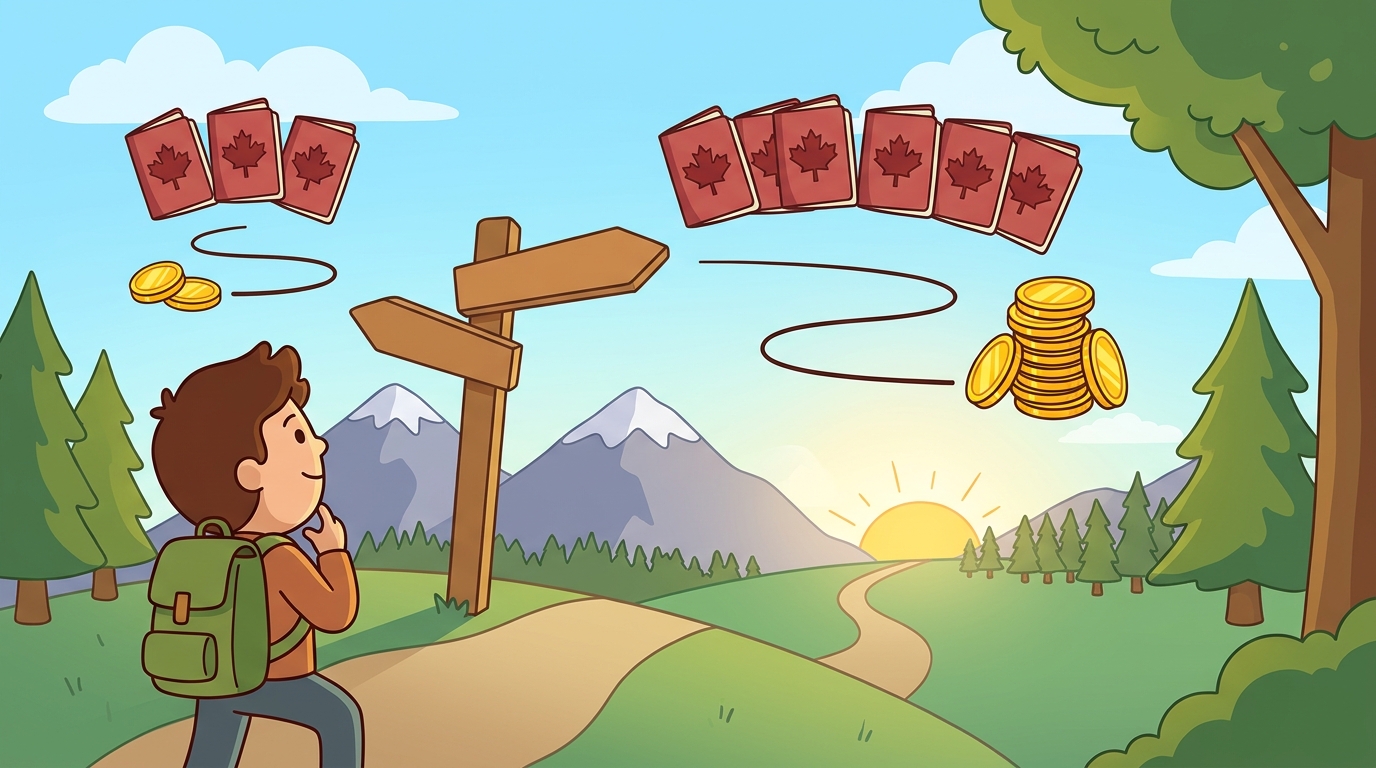
A 10-year adult passport costs $41 more than a 5-year one but lasts twice as long. If you will travel at any point in the next decade, the longer passport is the cheaper choice.
- Fees checked November 21, 2026
- By Krish Paul
- 5 min read
On this page
We used IRCC’s new fee schedule, in effect since March 31, 2026, to work out what each choice costs for one adult and for a family of four.
The short answer
For most adults, the 10-year passport is the better deal. It costs $163.50, while two 5-year passports cost $245.00 at today’s fees, so you save $81.50 over a decade. The 5-year passport only saves money if you are fairly sure you will not need a passport again once it expires.
Both options are for applicants aged 16 and up. Children aged 0 to 15 get a 5-year passport only, so for them there is no choice to make.

What passports cost after the March 2026 increase
IRCC raised most passport fees for applications received on or after March 31, 2026. According to its fee notice, this was the first update to passport fees since 2013. Here are the main fees for people applying in Canada.
| Fee (applying in Canada) | Before March 31, 2026 | From March 31, 2026 | Change |
|---|---|---|---|
| 10-year adult passport (16 and up) | $160 | $163.50 | +$3.50 |
| 5-year adult passport (16 and up) | $120 | $122.50 | +$2.50 |
| Child passport (0 to 15, 5 years) | $57 | $58.50 | +$1.50 |
| Urgent pickup (extra) | $110 | $125.75 | +$15.75 |
| Weekend or holiday service (extra) | $335 | $383.50 | +$48.50 |
Fees are in Canadian dollars for applicants living in Canada. Urgent pickup and weekend service are charged on top of the passport fee.
For a mailed application, the fee that applies depends on the date IRCC receives it, not the date you mail it, according to its fee change page. If you apply from outside Canada, fees are higher: $266.25 for a 10-year adult passport and $194.25 for a 5-year one.
The 10-year math for one adult
The longer passport costs more on the day you apply. The question is what that extra money buys. Spread over its life, the 10-year passport works out to $16.35 a year. The 5-year passport costs $24.50 a year.
Put another way, the $41 difference pays for five more years of validity. If you would otherwise buy a second 5-year passport in year six, the 10-year passport has already saved you money.
Future increases make the gap wider
IRCC says passport fees will now adjust every year in line with inflation under the Service Fees Act. Our math uses today’s fees for both renewals, so it understates the saving. With a 10-year passport, you lock in today’s price for a decade. With two 5-year passports, the second one will be bought at whatever the fee is five years from now.
What it means for a family of four
Take a hypothetical family with two adults and two children under 6. Over 10 years, each child needs two child passports at $58.50, which adds $234 no matter what the parents choose. The parents’ choice is where the money moves.
With both adults on 10-year passports, the family pays $561 over the decade. With both adults on 5-year passports, the total is $724. That is $163 more for the same travel, before any fee increases. Once a child turns 16, their next passport is an adult one, and the same 5-year or 10-year choice applies.
When the 5-year passport makes sense
There are a few cases where paying less now is reasonable:
- You expect to stop travelling. If this is likely your last passport, or you are planning one trip and none after, the 5-year option saves $41.
- Cash is tight right now. The 5-year passport costs less upfront, but it costs more if you renew.
- You expect a big change. If you plan to change your name, a passport that lasts 10 years may not be the one you keep using.
If none of these apply, the 10-year passport is the cheaper way to stay ready to travel.
The extra fees worth avoiding
The passport itself is not the only cost. Leaving it late can cost more than the 5-year versus 10-year choice.
- Urgent pickup (by the end of the next business day) now costs an extra $125.75. Added to a 10-year passport, that is $289.25 in total.
- Weekend or statutory holiday service costs an extra $383.50.
- Express pickup (within 2 to 9 business days) also costs extra. Urgent and express service are only available if you apply in person at a passport office.
There is some good news on timing. IRCC’s refund policy says that for processing completed on or after April 1, 2026, you get a full refund of the application fee if a complete application takes longer than 30 business days. Mailing time and holds for missing information do not count, and pickup and file transfer fees are not refunded.
Heading south soon? Read our guides to foreign transaction fees and how much cash you can bring across the border before you go.
Before you apply
A few minutes of planning can save you the urgent fee.
- Check your expiry date nowLook at every passport in the household, not just your own.
- Apply earlyStandard service avoids the $125.75 urgent fee, and the 30-business-day refund rule gives you a backstop.
- Pick 10 years if you will travel againThe extra $41 locks in today’s fee for a decade.
Frequently asked questions
Is a 10-year passport cheaper than a 5-year passport in Canada?
Yes, if you will need a passport for more than five years. The 10-year adult passport costs $163.50 when you apply in Canada, and two 5-year passports cost $245.00 at today’s fees, so the 10-year option saves $81.50 over a decade.
How much is a Canadian passport in 2026?
For applicants in Canada, a 5-year adult passport costs $122.50, a 10-year adult passport costs $163.50 and a child passport for ages 0 to 15 costs $58.50. These fees took effect for applications received on or after March 31, 2026.
Can children get a 10-year Canadian passport?
No. Passports for children aged 0 to 15 are issued with 5-year validity only, at $58.50 when you apply in Canada. The 5-year and 10-year choice applies to applicants aged 16 and up.
Will Canadian passport fees go up again?
Likely. IRCC says passport fees will now adjust annually under the Service Fees Act, which updates certain government fees based on inflation. The March 31, 2026 increase was the first passport fee update since 2013.
Do you get a refund if your passport takes too long?
For processing completed on or after April 1, 2026, IRCC refunds the full application fee if a complete application took longer than 30 business days to process. Administrative fees, such as pickup and file transfer fees, are not refunded under this rule.
- Sources, checked November 21, 2026: IRCC: Passport and travel document fee changes; IRCC: Passport and travel document fees increase soon (notice); IRCC: Refunds for applications processed outside service standards; IRCC: Pay your passport fee in Canada.
- Method: Per-year cost = fee divided by years of validity. 10-year saving = two 5-year fees minus one 10-year fee. Family example = two adult passports plus four child passports over 10 years. All figures use the fees in effect since March 31, 2026, assume no future increases, and were calculated by script and checked a second way.
Important: This guide is general information, not financial advice. Passport fees and rules can change; confirm them with IRCC before you apply. Gizly has no affiliate links on this page. See our affiliate disclosure.
Send it to a friend, a family member or a coworker with the same question. It takes one tap.
How this page was made: Gizly uses AI tools to help research and draft its guides. Krish Paul, the editor, is responsible for what Gizly publishes. Spot an error? Tell us and we will fix it.
Keep reading

Compare before you switch
Rates and offers checked against each bank’s own page.