Canada Student Grant 2026-27: Up to $4,200 a Year and Who Qualifies
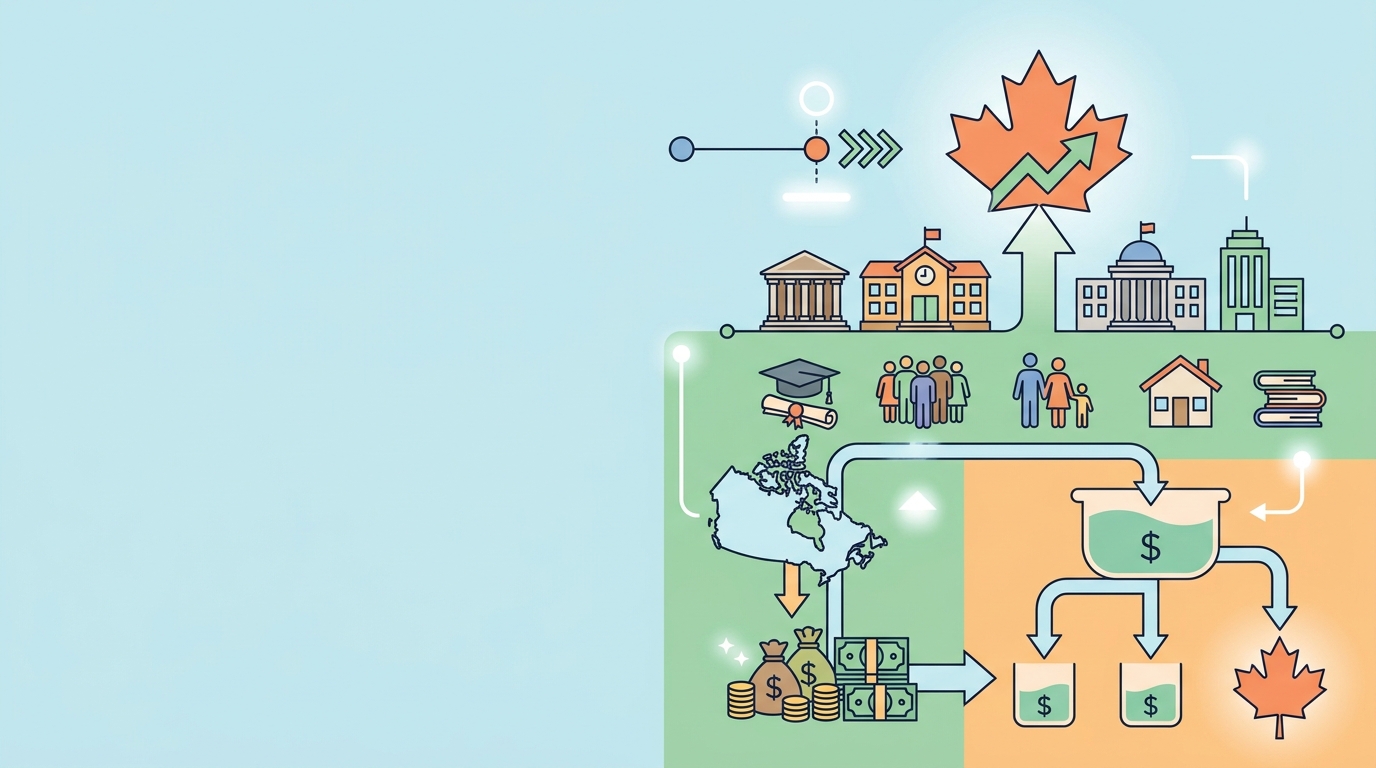
The Canada Student Grant is money for college or university that you never pay back. For the 2026 to 2027 school year, a full-time student can get up to $4,200, with no separate application.
- Amounts checked November 4, 2026
- By Krish Paul
- 8 min read
On this page
This guide covers who qualifies, the income limits by family size, the extra grants for parents and students with disabilities, and what is known about amounts after July 2027.
The short answer
Full-time students from low- and middle-income families can get up to $4,200 for the 2026 to 2027 school year, or $525 for each month of study, and they never repay it. You do not apply for the grant on its own. You are assessed for it automatically when you apply for student aid through your province or territory.
Parents in school full-time can get up to $2,240 more for each child, and students with disabilities get $2,800 a year. The grants are not available to students from Quebec, the Northwest Territories or Nunavut, which run their own programs.
Every Canada Student Grant for 2026 to 2027
There are six federal student grants. The school year runs from August 1 to July 31, and the amounts below apply until the end of the 2026 to 2027 school year.
| Grant | Most in 2026 to 2027 | Most in 2019 | Main condition |
|---|---|---|---|
| Full-time students | $4,200 a year | $3,000 | Financial need and family income under the cut-off |
| Full-time students with dependants | $2,240 per dependant | $1,600 | A dependent child, paid on top of the full-time grant |
| Part-time students | $2,520 a year | $1,800 | Never more than your assessed need |
| Part-time students with dependants | $2,688 a year | $1,920 | Need not covered by the part-time grant |
| Students with disabilities | $2,800 a year | $2,000 | Same amount whatever your assessed need |
| Services and equipment for students with disabilities | $20,000 a year | Not listed | Proof of need and cost from a qualified person |
Sources: canada.ca grant pages for 2026 to 2027, and Table 2.1 of the Spring Economic Update 2026 for 2019. The 2019 dependants figure is per dependant. The services and equipment grant is “up to” $20,000 per school year.
Who qualifies for the full-time grant
According to the full-time grant page, you could be eligible if you apply for student aid and:
- you have a financial need
- you are a full-time student in a qualified program at a designated school that is not restricted from this grant
- your total family income is below the threshold for your family size
You can get the grant for each year of your undergraduate studies as long as you stay in school full-time. The part-time grant also covers studies beyond the undergraduate level.
For the dependants grants, your child must be under 12 at the start of your study period, or older with a permanent disability.
Private for-profit schools
Most students at private, for-profit schools in Canada can no longer get the full-time grant, though some programs are exempt. Starting August 1, 2026, students at private, for-profit international schools are not eligible for any federal funding. The grants and loans page says students who already got federal aid for their current program at the same school may still qualify until July 31, 2029.
Income limits by family size
The test uses your previous year’s gross annual family income. Below the first figure, you qualify for the maximum. At or above the second, you get no grant. These thresholds took effect on August 1, 2026, and the part-time grant uses the same table.
| Family size | Maximum grant if income is below | No grant at or above |
|---|---|---|
| 1 | $38,474 | $69,987 |
| 2 | $54,412 | $98,017 |
| 3 | $66,641 | $117,317 |
| 4 | $76,952 | $129,769 |
| 5 | $86,033 | $141,180 |
| 6 | $94,245 | $151,937 |
| 7 or more | $101,797 | $161,321 |
Source: canada.ca, Canada Student Grant for Full-Time Students. The grants for students with dependants use the same figures from family size 2 up.
If your income falls between the two columns, you may get a smaller grant. The canada.ca grant pages do not publish the reduction formula, so your province’s assessment is the only place to see your exact amount. For example, a family of four with $90,000 of income is above $76,952 but below $129,769, so a reduced grant is possible.
Worked example: a single parent going back to school
This is a hypothetical case. Maya is a full-time college student raising two children, aged 4 and 7. Her family size is 3 and her income last year was $52,000, below the $66,641 maximum-grant threshold. Her study period runs 8 months, September to April.
| Grant | How it is worked out | Most she could get |
|---|---|---|
| Full-time students | $525 x 8 months | $4,200 |
| Full-time students with dependants | $280 x 8 months x 2 children | $4,480 |
| Total | Non-repayable | $8,680 |
Method: calculated in Python by month, then checked against the yearly maximums ($4,200 plus 2 x $2,240 = $8,680). These are maximums. The final amount depends on her assessed need.
A second case: a full-time student with a disability who lives alone and earned under $38,474 could get up to $4,200 plus $2,800, or $7,000. With documents showing the need and the cost, the services and equipment grant can add up to $20,000 more.
How to apply
- Apply through your province or territory. Your provincial program, such as the Ontario Student Assistance Program (OSAP), tells you if you are eligible and how much you could get. The canada.ca apply page links to every program.
- Let the assessment run. You are assessed for the federal grants automatically. There is no extra form for the full-time grant.
- Add disability documents if they apply. The disability grants need a document that shows your disability, sent with your application.
- Confirm your enrolment. You or your school must confirm you are enrolled before grant or loan money is paid. You can do it in your National Student Loans Service Centre account.
- Watch for next steps. After you apply, your provincial or territorial student aid service contacts you about what comes next.
Manitoba, New Brunswick and Yukon use a paper Part-Time Canada Student Grant and Loan Application for 2026 to 2027. Part-time students elsewhere apply on their province’s website.
If your grant has not arrived, first check that your enrolment is confirmed in your National Student Loans Service Centre account. If it is, contact your provincial or territorial student aid office, since it runs your assessment.
What could change after July 2027
The $4,200 figure is a temporary 40% increase. It started in the 2023 to 2024 school year and was extended for 2024 to 2025 and 2025 to 2026. On March 23, 2026, the government announced one more year, covering 2026 to 2027.
- Before the increaseThe full-time maximum was $3,000 a year, and the weekly loan limit was $210.
- Right nowThe grant pages list the higher amounts only until the end of the 2026 to 2027 school year.
- What to doPlan your 2027 to 2028 budget with both figures until the government says which applies.
How the grant fits with student loans
Grants are only part of federal student aid. The Government of Canada covers up to 60% of a student’s assessed need, and the provinces and territories are expected to cover the rest. The amount you get depends on your province, family income, dependants, tuition and living costs, and any disability.
- Loans are interest-free. No interest has accrued on Canada Student Loans since April 1, 2023.
- Higher loan limit. For 2026 to 2027, the weekly loan limit stays at $300, up from $210.
- Repayment starts later. You start paying back loans 6 months after you finish your studies. See whether paying them off early makes sense.
- Help if money is tight. The Spring Economic Update 2026 says the Repayment Assistance Plan lets borrowers pause repayment until they earn at least $40,000 a year.
There is also a cap on how long you can get aid. Full-time students can receive student aid for up to 340 weeks, doctoral students up to 400 weeks, and students with a disability up to 520 weeks, as set out on How the funding works. To see what the grant covers against real costs, compare it with tuition by program in 2026 to 2027.
Common mistakes
- Waiting for a separate grant form. There is none. If you never apply for provincial student aid, you are never assessed.
- Assuming a high income rules you out. A family of five below $141,180 may still get part of the grant.
- Enrolling at a restricted school. Check whether your private, for-profit school is still eligible before you commit.
- Skipping enrolment confirmation. No confirmation means no payment.
- Dropping courses as a part-time student. To keep qualifying, you must have completed the courses you got a grant for in the past.
- Forgetting the disability paperwork. Without it, you miss the $2,800 grant even if you qualify.
Frequently asked questions
How much is the Canada Student Grant for 2026 to 2027?
A full-time student can get up to $4,200 for the 2026 to 2027 school year, or up to $525 for each month of study. Part-time students can get up to $2,520. Students with disabilities can get $2,800, and full-time students with children can get up to $2,240 for each dependant on top of the full-time grant.
Do you have to pay back the Canada Student Grant?
No. Canada Student Grants are non-repayable. Only the Canada Student Loan part of your student aid has to be paid back, starting six months after you finish your studies.
How do I apply for the Canada Student Grant?
There is no separate application. You apply for student aid through your province or territory, and you are assessed for the federal grants automatically. You or your school then confirm your enrolment before the money is paid.
What family income is too high for the Canada Student Grant?
It depends on family size. For 2026 to 2027, a family of one gets no full-time grant at a previous-year gross income of $69,987 or more, and a family of four gets none at $129,769 or more. Below $38,474 and $76,952, those same families qualify for the maximum.
Can students from Quebec get the Canada Student Grant?
No. The federal grants are not available to students from Quebec, the Northwest Territories or Nunavut. Those places run their own student aid programs and can receive federal funding to provide comparable support.
Will the Canada Student Grant still be $4,200 after July 2027?
Not confirmed. The $4,200 amount is a temporary increase that the government extended for one more year, the 2026 to 2027 school year. Before the increase, the full-time maximum was $3,000. The official pages list the higher amounts only until the end of the 2026 to 2027 school year.
- Sources, checked November 4, 2026: Canada Student Grant for Full-Time Students (modified 2026-08-31); Grant for Full-Time Students with Dependants (modified 2026-06-29); Grant for Part-Time Students (modified 2026-06-29); Grant for Part-Time Students with Dependants (modified 2026-06-29); Grant for Students with Disabilities (modified 2026-06-29); Grant for Services and Equipment for Students with Disabilities (modified 2022-08-02); Student grants and loans (modified 2026-10-22); Apply with your province or territory (modified 2026-10-30); How the funding works (modified 2026-06-12); ESDC news release, March 23, 2026 (modified 2026-03-23); Spring Economic Update 2026, Chapter 2.
- Method: The worked example was calculated in Python by month of study and re-checked against the published yearly maximums. The chart was generated by script from the same canada.ca figures.
Important: This guide is general information, not financial, tax or legal advice. Your province or territory decides your actual grant through its assessment. Gizly is not affiliated with the Government of Canada. See our affiliate disclosure.
Keep reading



Compare before you switch
Rates and offers checked against each bank’s own page.
Send it to a friend, a family member or a coworker with the same question. It takes one tap.
How this page was made: Gizly uses AI tools to help research and draft its guides. Krish Paul, the editor, is responsible for what Gizly publishes. Spot an error? Tell us and we will fix it.